Lip blush is a permanent makeup technique that deposits soft, semi-permanent color into the lips — giving you natural-looking tone, definition, and pigmentation that lasts up to 2 years.
But the result you see healed is shaped almost entirely by how well you care for your lips in the first 30 days. This guide covers everything you need to know.
What Happens to Your Lips After Lip Blush?
Your lips go through predictable stages after the procedure. Understanding them means you won’t panic when things look unexpected.
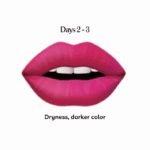
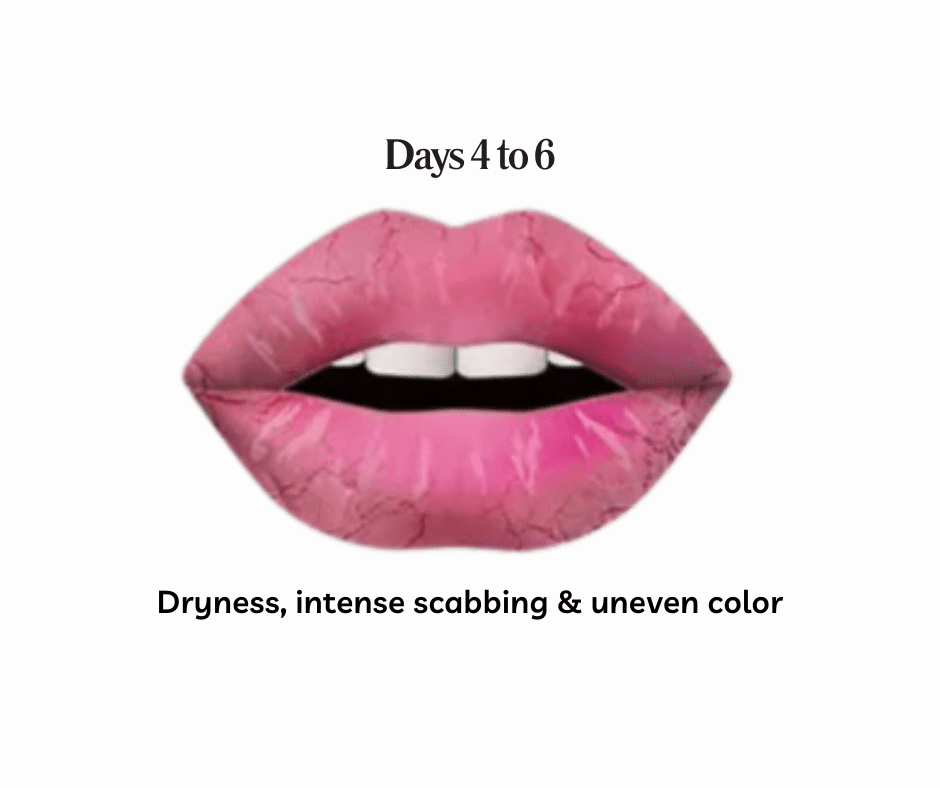
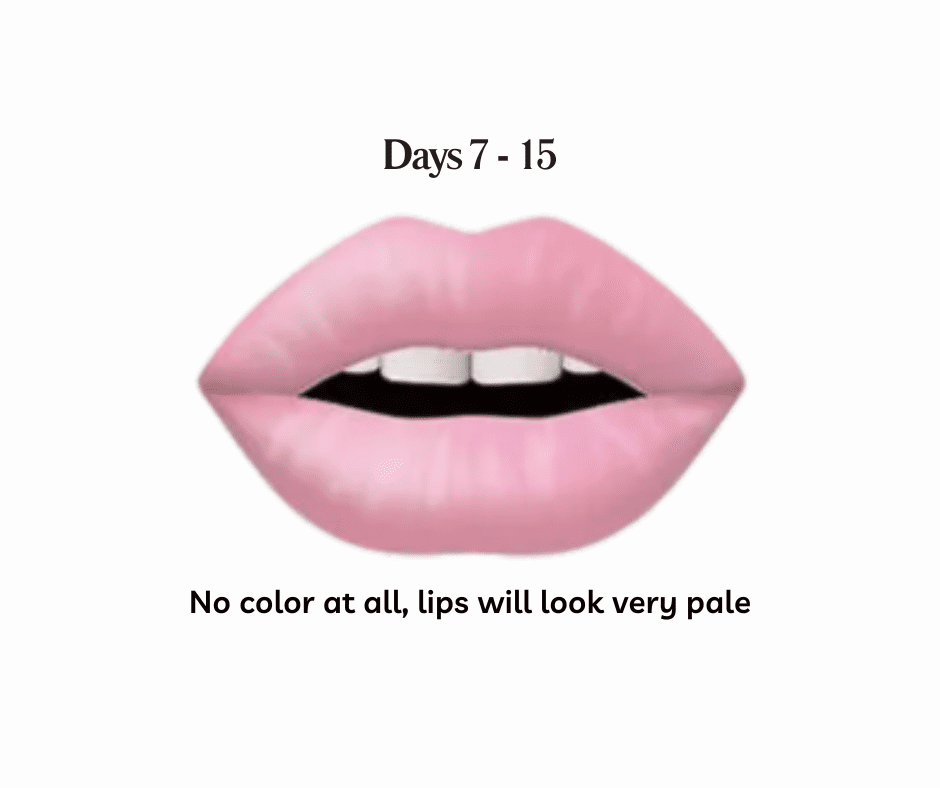
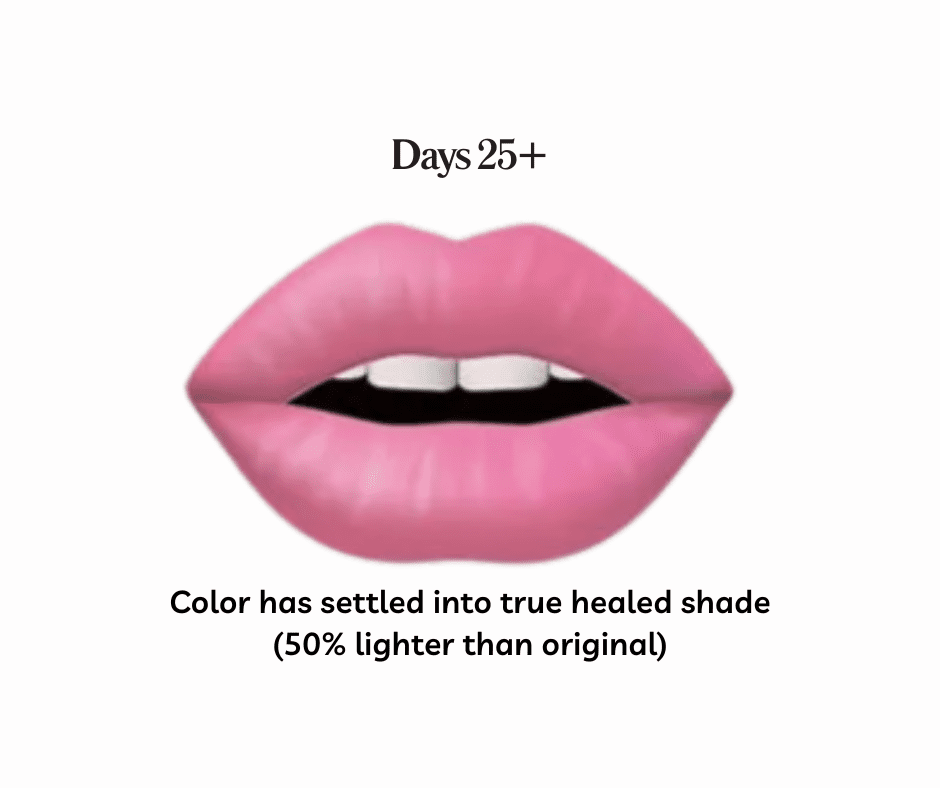
Day 1–3: Swelling and intense color Immediately after the session, your lips will be noticeably more swollen and much darker than your intended final result. This is normal. The color can look alarming — 2–3 shades darker than what was applied.
Day 3–5: Peeling begins A thin film of skin will begin to flake away. Do not pick or pull at it. Peeling prematurely removes pigment and can cause uneven healing or, in some cases, light scarring.
Day 5–10: Color appears to vanish This is the stage that worries most clients. As the outer skin sheds, the lips can look like the pigment has completely disappeared. This is completely normal. The color is still there — it’s just sitting under a fresh layer of skin.
Day 10–30: Color surfaces and stabilizes Gradually, the healed color returns. By day 25–30, you’ll see your true healed result. Expect it to be 40–60% lighter than the immediate post-procedure color.
Lip Blush Aftercare: Day by Day
Days 1–5 (critical phase)
- Do not touch the area with unwashed hands — the skin is technically an open wound
- Hydrate with the aftercare product I provide, at minimum 3 times a day — more is better
- After the first 24 hours, you may gently rinse the area
- Avoid excessive sweating for the first 48 hours
- No spicy food, coffee, wine, or colored drinks that could stain or irritate
- Do not kiss, stretch the lips dramatically, or press them together forcefully
Days 5–30
- SPF 50 every morning, without exception — UV exposure is the fastest way to fade pigment prematurely
- You may resume normal makeup and skincare
- Continue to avoid saunas, swimming pools, and steam rooms
- Skip acids, retinols, and peels on the lip area
- Moisturize daily
What to Avoid After Lip Blush
| Avoid | Why |
|---|---|
| Picking at peeling skin | Pigment loss, uneven healing, scarring |
| Sun exposure | Premature fading |
| Retinol near the area | Disrupts healing, breaks down pigment faster |
| Chemical peels | Removes pigment layers |
| Kissing in early days | Friction disrupts healing skin |
| Spicy or hot food (days 1–5) | Increases inflammation, spreads pigment |
When Do I Need a Touch-Up?
A touch-up at 6–10 weeks after your initial session is highly recommended — not required, but worthwhile.
It allows me to:
- Add pigment to any areas that healed unevenly
- Adjust tone if the color shifted during healing
- Refine the lip line if needed
After the touch-up, expect 1–2 years of results before another session is needed, depending on your skin type, lifestyle, and sun exposure.
Frequently Asked Questions
My lips look completely colorless after peeling — is that normal? Yes. This is the “ghost phase” and it happens to almost everyone. Wait until day 25–30 to assess your result.
Can I wear lip gloss after lip blush? After the peeling stage is complete (day 5–7), yes. Avoid matte formulas that might dry the lips out during the healing window.
What if my lips heal unevenly? Uneven healing is common and is corrected at the touch-up appointment. Try not to judge the final result before your lips have fully healed.
I got lip blush in Seoul — how do I continue aftercare when I travel home? I send all clients home with aftercare product. Continue the same protocol. Contact me by message if you have questions during healing — wherever you are.
Does lip blush affect cold sores (herpes simplex)? Yes. The procedure can trigger an outbreak if you carry HSV-1. I recommend a 3-day course of antiviral medication starting before your appointment. Please inform me if this is relevant to you.